
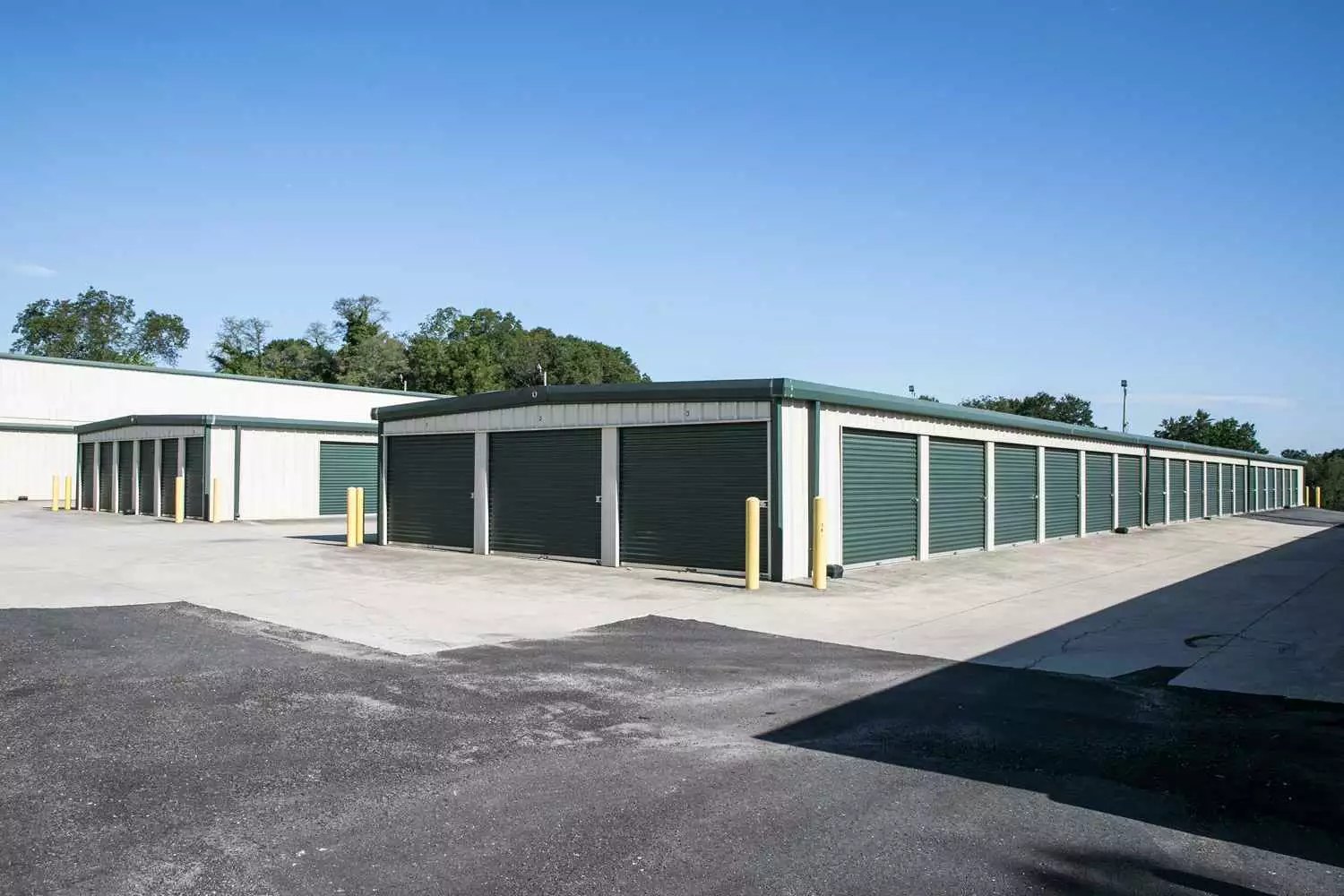
StorageMart on 13th Avenue South in Fargo, North Dakota manages one of the largest self-storage footprints in the upper Midwest, operating in a climate that sits at the opposite extreme from the hurricane-dominated Gulf Coast markets. Fargo's winters are long, cold, and snow-heavy, with design ground snow loads among the highest in the lower 48 states and temperatures that regularly fall below minus-20°F for days at a time. A self-storage roof in Fargo must be designed for the weight of accumulated snow, the structural stress of thermal cycling across a 100-degree seasonal temperature range, and the specific problems created when those conditions combine.
The ASCE 7 ground snow load for Fargo is 40 psf, but roof design loads for large flat-roof buildings in open exposure, which describes most self-storage campuses on the outskirts of Fargo, must account for drift accumulation that can more than double the ground load at walls and parapets. A storage building with a mechanical penthouse or taller equipment room at one end of the roof is a classic drift accumulation site: snow blows off the flat field and piles against the taller section until the load exceeds three times the ground snow load in the drift zone. Our pre-construction engineering review includes a drift load calculation for every Fargo project that has elevation changes.
Structural review is a non-negotiable first step for any Fargo self-storage re-roof because many of the older metal buildings in the market were designed with minimal snow load margins in the 1980s and 1990s, and some have already experienced partial structural events during high-snow winters. We work with a North Dakota-licensed structural engineer to assess existing deck and framing capacity before adding any new assembly weight, and we document the structural review for owner records. This step protects our clients from the liability that comes with adding weight to a marginal structure.
Metal roofing dominates the Fargo self-storage market, and most of the older buildings use through-fastened corrugated or ribbed panels that have been cycling through freeze-thaw for decades. The challenge in Fargo is that the fasteners do not just back out from thermal cycling, they also create thermal bridges that accelerate condensation and ice dam formation on the underside of the panel in the coldest weather. A standing-seam retrofit panel system installed over the existing roof with a continuous insulation layer breaks the thermal bridge, improves the building's energy performance, and eliminates the fastener failure mode in a single installation.
Drainage design in Fargo must size for spring snowmelt events, which are the design condition for roof drainage in this climate. The Red River valley floods regularly during snowmelt, and that regional context means Fargo operators are well aware of drainage capacity as a risk factor. We size all roof drainage systems for a 100-year rainfall event combined with a spring snowmelt scenario, and we install heat tape in drain bowls and the first several feet of all downspouts to prevent ice bridging during the late-winter transition period when partial thaws and refreezes are most frequent.
Climate-controlled storage is growing in the Fargo market as operators compete for the tenants who are storing furniture, electronics, and business inventory that cannot tolerate North Dakota's temperature extremes. These buildings have heating loads that make roof thermal performance a direct operating cost factor: every R-value added to the roof assembly reduces the heating cost that keeps climate-controlled units at their set point through a Fargo January. We specify high-performance polyiso insulation systems for climate-controlled buildings that meet or exceed the energy code requirements for the northern climate zone.
Tenant protection in a Fargo winter re-roof requires strict protocols around open decking. A building that has its roof partially removed in October when temperatures are dropping toward zero creates an emergency for the tenants whose property is inside. We will not open roof decking in Fargo between November 15 and March 15 unless the specific building conditions and weather forecast make a controlled partial opening feasible. When winter work is unavoidable, we tent work areas with temporary enclosures and propane heat and maintain the ability to close and protect any open section within thirty minutes.
North Dakota does not have a statewide contractor licensing law, but Fargo requires a commercial contractor's registration, and most large institutional storage accounts require proof of licensing, bonding, and insurance from their roofing contractors. We maintain registration in Fargo and all of the surrounding Cass County municipalities, and we carry the bonding levels required for institutional account contracts.
The self-storage market in Fargo has benefited from the city's steady growth as the regional economic center of the upper Midwest, driven by agriculture, healthcare, and technology sectors. Operators who invest in quality roof systems that are documented, warranted, and structurally sound are capturing the institutional investor interest that has reached this market in the past decade, and they are positioned to benefit from the continued growth that Fargo's diversifying economy will generate.
- What snow load must I design for on a Fargo self-storage roof?
- Fargo's ground snow load is 40 psf, but roof design loads must account for drift accumulation at walls, parapets, and elevation changes, which can reach two to three times the ground load in drift zones. We perform site-specific drift calculations for every Fargo project.
- Should I do a structural review before re-roofing an older Fargo storage building?
- Yes. Many older metal buildings in the Fargo market were designed with minimal snow load margins, and adding new assembly weight without confirming structural capacity creates liability exposure. We coordinate a licensed structural review before every Fargo re-roof proposal.
- What is the best re-roofing system for Fargo's thermal cycling range?
- A standing-seam retrofit panel system with continuous insulation installed over the existing corrugated metal roof eliminates the thermal bridging and fastener failure modes of the original through-fastened system and delivers meaningful energy performance improvements for climate-controlled buildings.
- How do you prevent ice bridging in Fargo drain systems?
- We install heat tape rated for continuous operation in all interior drain bowls and the first several feet of all downspouts. Heat tape is also specified at any horizontal runs in the drainage system that are not protected from outside temperatures during the winter transition period.
- Can you re-roof a Fargo storage building in winter?
- We avoid opening roof decking between November 15 and March 15 when possible. When winter work is unavoidable, we use temporary enclosures with supplemental heat, cold-weather-rated adhesives, and strict protocols for securing any open decking within thirty minutes of changing weather conditions.
Questions Building Owners Ask
What usually changes the price for acrylic and silicone roof coatings?
For acrylic and silicone roof coatings, access, wet insulation, deck repair, edge metal, drains, temporary protection, after-hours work, and occupied-building staging change the number faster than the roof label. We verify those acrylic and silicone roof coatings conditions around Casselton before treating a square-foot price as reliable.
Can acrylic and silicone roof coatings be handled while the building is occupied?
Often, but the acrylic and silicone roof coatings sequence has to be planned. We review entrances, loading docks, patient or tenant areas, roof access, odor sensitivity, and weather windows near Veterans Boulevard Corridor before recommending daytime, phased, or after-hours work.
How do we know if acrylic and silicone roof coatings should be repair, coating, recover, or replacement?
We look at acrylic and silicone roof coatings through wet insulation, deck condition, attachment, slope, seam condition, drain performance, and edge-metal risk. If the roof around June normal precipitation of 4.29 inches is dry and stable for acrylic and silicone roof coatings, preservation options stay on the table. If moisture or deck damage is spreading through acrylic and silicone roof coatings, replacement planning becomes more defensible.
What documentation do we get after a acrylic and silicone roof coatings inspection?
Typical acrylic and silicone roof coatings documentation includes roof-area notes, photo locations, leak or damage observations, priority levels, repair limits, access constraints, and budget categories. On storm work tied to acrylic and silicone roof coatings, we provide contractor-side roof evidence without promising insurance outcomes.
How quickly can you look at acrylic and silicone roof coatings after a leak or storm?
Timing for acrylic and silicone roof coatings depends on weather, crew load, access, and whether interior water is active. We triage emergency conditions first, especially when water is entering occupied space near healthcare campus roofs, and then separate temporary dry-in from permanent scope.