
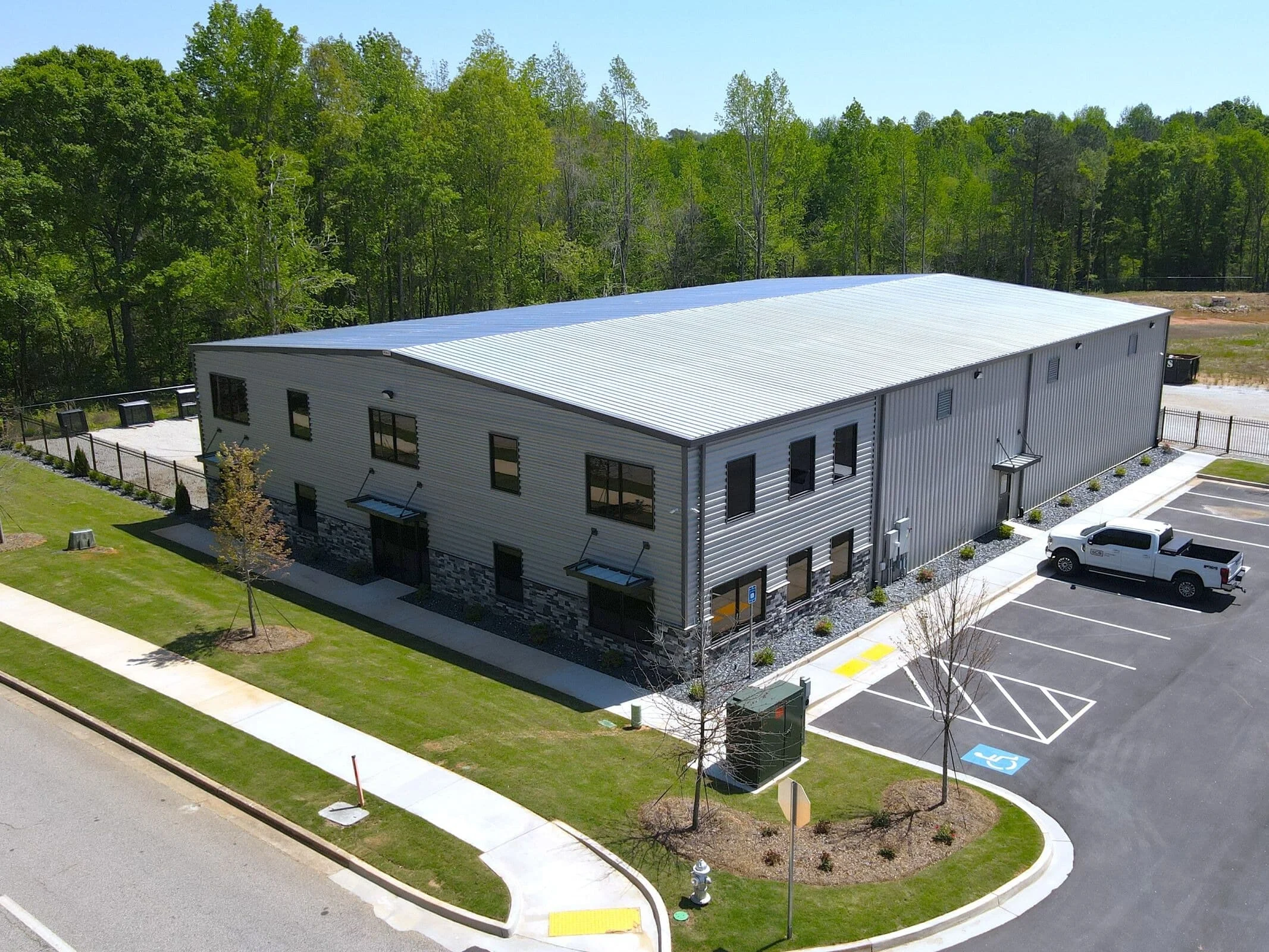
Flex buildings change tenants. The roof has to keep up.
A flex building is the hardest-working envelope we maintain in Fargo, and its roof rarely gets credit for it. The same low-slope deck might cover a machine shop in one bay, a regional distributor's pick-and-pack operation in the next, and a contractor's office-plus-warehouse suite at the end of the row. We work these buildings across the West Fargo industrial area off 12th Avenue and Main, the corridors feeding off I- interchange, and the established light-industrial blocks north of downtown near the rail spurs that still serve a good share of the city's freight. Every one of those tenants treats the roof as theirs, and every move-in and move-out leaves a mark on it.
That is the core reality of industrial flex roofing: it is multi-tenant, low-slope, and absolutely covered in penetrations. Vents, condenser curbs, gas lines, electrical whips, exhaust fans, satellite mounts, and the occasional abandoned curb from a tenant who left three leases ago. We have walked flex roofs in Fargo with more than forty penetrations across a single 20,000-square-foot deck. Each one is a place water wants to get in, and on a building where nobody owns the whole roof, those details are exactly what gets neglected.
We start with a penetration audit, not an estimate
Before we price anything on a flex building, we map the roof. We photograph and locate every curb, every pipe, every fastener line, and we flag the penetrations that don't appear on any drawing the property manager can produce, because on a building that has cycled through eight or ten tenants, the as-builts stopped matching reality years ago. Undocumented tenant-improvement penetrations are the single most common reason a flex roof leaks, and they are the reason a reroof bid from someone who skipped the walk is almost always wrong.
The audit tells us what we are really dealing with. Sometimes it is a field of failing pitch pockets that a coating and detail program can stabilize for several more seasons. Sometimes it is a deck that has been cut and patched so many times that a full tear-off is the only honest answer. Either way, the owner gets a decision based on what is actually up there, not a number pulled off a scope.
Tenant improvements never stop, so we plan for them
The thing that separates flex from a single-user warehouse is that the building keeps getting modified after the roof is done. A new tenant signs, the HVAC contractor adds three rooftop units, the electrician runs a fresh conduit, and suddenly there are five new holes in a membrane that carried a clean warranty last month. We set flex clients up so that doesn't become a leak or a warranty dispute. That means a documented penetration standard for the building, a flashing detail their mechanical subs are expected to follow, and an open line to us when a tenant build-out touches the roof.
We would rather flash a new curb correctly the week it goes in than chase the stain it leaves on a tenant's drop ceiling six months later. On the multi-tenant buildings we maintain around Cass County, that single habit has done more to extend roof life than any premium membrane upgrade.
Vacant bays are where the trouble hides
Occupied space gets noticed. A leak over an active tenant generates a phone call the same day. A vacant bay can sit for a season with a failed curb cap or a clogged drain, quietly soaking the insulation, and nobody knows until the next tenant tour walks into a wet ceiling. We treat lease-transition inspections as their own scope: confirm every former-tenant penetration is sealed, verify curb caps where rooftop units were pulled, clear the drains and scuppers, and document the bay's condition so it doesn't become the new tenant's problem on day one. Fargo's snow load makes this worse, a blocked internal drain under a melting load puts standing water exactly where the assembly is already compromised.
Membrane and metal, matched to the building
Flex inventory in Fargo splits into two broad camps. Older tilt-wall and block buildings with built-up or early single-ply roofs are usually best served by 60-mil TPO mechanically attached over new polyiso, which gives a clean warranty and a reflective surface that helps with summer cooling load on the office portions. Pre-engineered metal flex buildings are a different conversation entirely, depending on panel condition and purlin spacing, a coated-metal restoration or a retrofit standing seam recover can add decades without the cost and tenant disruption of a full tear-off. We spec both, and the audit decides which one your building has earned.
Working around the businesses inside
A flex roof job is really several small jobs sharing one deck, each with its own tenant who has shipping deadlines, customer traffic, or noise-sensitive office work below. We sequence the work bay by bay off an occupancy map from property management, keep every section watertight at the end of each day, and route all tenant communication through the manager rather than letting crews field requests from a dozen different businesses. The goal is simple: the roof gets replaced and nobody loses a day of operations they didn't expect to lose.
Built for owners and managers running a portfolio
Most of the flex space in this market is held by investors and managed in groups, not owned one building at a time. We report accordingly. Owners get condition documentation they can drop straight into a capital plan, fixed-price scopes after a real roof walk, and a consistent point of contact across every property in the portfolio. When you are budgeting roofs across a half-dozen flex buildings in the Red River Valley, the last thing you need is a different story and a different format from every property.
Talk to us about your flex building
If you own or manage industrial flex space anywhere around Fargo, West Fargo, or Moorhead, start with a roof walk and a penetration audit. We will tell you what is actually on the deck, what it is going to do over the next few winters, and what it costs to get ahead of it. Request a roof review or call 701-987-7206.