
Roofing a building a family is trusting on its worst day
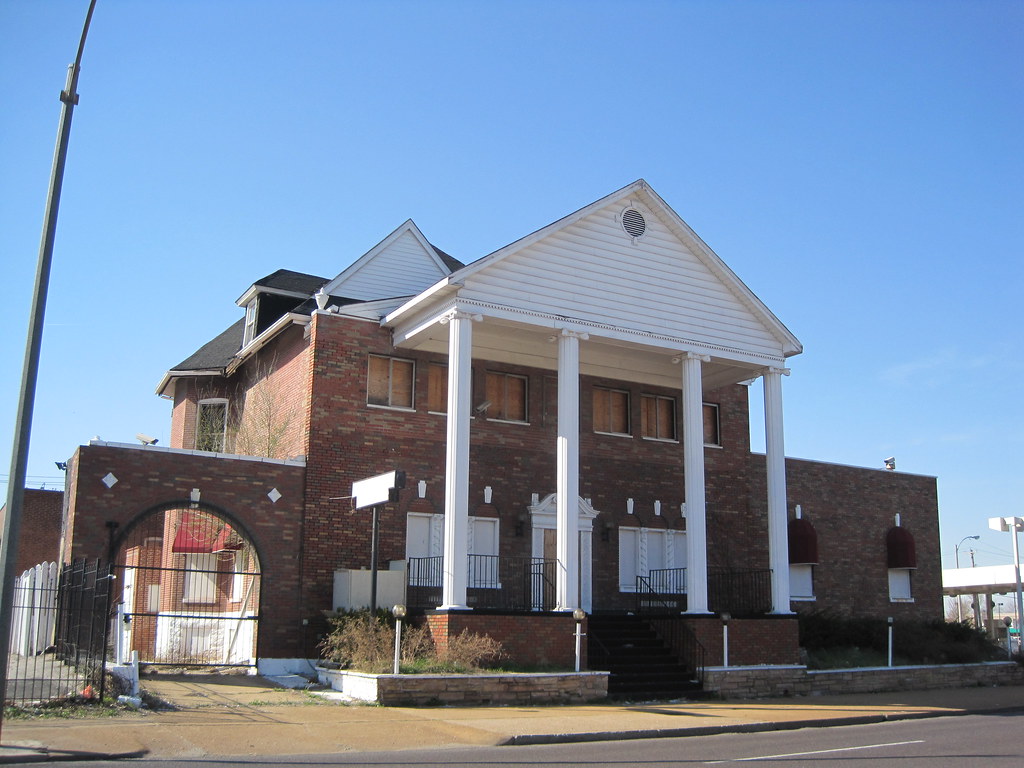
A funeral home is not a building you can treat like any other commercial property. Many of Fargo's are long-standing family firms in the city's older neighborhoods, along the Broadway corridor downtown, in the established blocks near South University, and out among the historic Hawthorne and Roosevelt districts where the homes themselves have decades of service behind them. When we roof one of these, the work has to be invisible to the families inside. No banging hammers during a service, no debris on the front walk, no lift parked across the entrance when a procession is forming. The roof matters, but the dignity of the building matters more, and we plan the job so the two never collide.
These facilities are also never really empty. Visitations run into the evening seven days a week, services can be scheduled on short notice, and the preparation room operates on a timetable set by death calls rather than by anyone's construction plan. That makes a funeral home an occupied building in the strictest sense, closer to a hospital than to an office park, and we bring that same occupied-building discipline to every step.
The preparation room exhaust cannot go offline
The single most important mechanical detail on a funeral home roof is the preparation-room exhaust. Embalming and prep areas run under negative pressure to contain formaldehyde and other vapors, and the rooftop exhaust serving them has to keep running continuously to stay compliant and safe. You do not cap that stack, block it, or take it down for a day because it is in the way of the membrane. We locate it before we ever mobilize, scope the flashing around it as its own task done with the director's sign-off, and confirm the exhaust keeps operating while anyone is working near it. Everything about how we sequence that area is focused on keeping that fan running.
The visible roof matters just as much in a different way. A funeral home is a community-facing building, and a patched, mismatched, or sloppily flashed roofline reads as neglect to every family that pulls into the lot. We hold edge metal, fascia, and any street-facing detail to an appearance standard, not just a watertight one, so the building looks cared for from the curb after we leave.
Chapel spans and the surprises in an older roof
Chapel and visitation rooms are often built as clear spans of forty to sixty feet with no interior columns, much like a small church sanctuary. Those spans flex and they generate real wind-uplift loads, so the fastening pattern and membrane have to be designed for the structure rather than copied from a small flat-roof detail. And because so many Fargo funeral homes occupy older buildings, what is under the surface is frequently not what it looks like. A serviceable-looking built-up roof on a wood or concrete deck can hide saturated insulation underneath. We core-sample and run a moisture survey before recommending a recover, because layering new membrane over wet insulation just buries a problem that will resurface.
- Chapel and visitation wings, clear-span fastening designed for the actual deck and uplift load.
- Preparation and mechanical areas, continuous exhaust protected, flashing scoped as its own discreet task.
- Front-facing rooflines and entries, edge metal and detailing held to an appearance standard families will see.
The membrane and the entry canopy
For the flat-roof portions of most Fargo funeral homes we run a mechanically attached single-ply over tapered polyiso. The taper is doing real work here: older funeral homes are notorious for drainage that has gone flat over the decades, and the ponding that results is what degrades a low-slope membrane fastest. Building positive drainage back into the roof solves the underlying cause rather than just resurfacing over it. On wood-decked chapel sections we confirm load capacity before settling on insulation thickness so we never overload an older structure.
The porte-cochere or covered entry, where families and pallbearers stand, often in North Dakota weather, gets its own attention. The transition where that canopy meets the main building, and the drainage tying the two together, is one of the most common chronic leak points on older funeral homes. We treat it as a discrete scope item with its own flashing detail rather than folding it into the main field, because a drip onto the entry during a service is exactly the failure a funeral home cannot have.
Funeral home and mortuary roofing questions
How do you work around services and visitations?
We schedule against the director's weekly calendar. We take advance notice of every service and visitation, keep active areas quiet and protected during them, stay clear of the main entry and chapel during service hours, and confirm a watertight dry-in before the building closes each evening.
What happens to the preparation-room exhaust during the work?
It stays running. The prep-room exhaust must operate continuously for compliance, so we locate the stack before mobilization, scope its flashing as a separate task with the director's approval, and confirm the exhaust is operating during any work near it. It is never capped or taken offline for our convenience.
What membrane do you put on a funeral home?
Typically a mechanically attached single-ply over tapered polyiso. The taper restores the positive drainage that older funeral homes have usually lost, eliminating the ponding that ruins a low-slope roof fastest. On wood-decked chapel sections we confirm load capacity before choosing insulation thickness.
Can you reroof a long chapel span?
Yes. Clear-span chapel roofs carry the same uplift demands as a small sanctuary. We evaluate the deck type, span, and existing attachment and design the fastening to that structure, with pull-out testing or structural documentation where the deck requires it.
Do you handle the porte-cochere and entry canopy?
Yes, as their own scope item. The canopy-to-building transition and its drainage are the most frequent source of recurring leaks on older funeral homes, so we detail and flash them separately rather than treating the entry as an afterthought.