
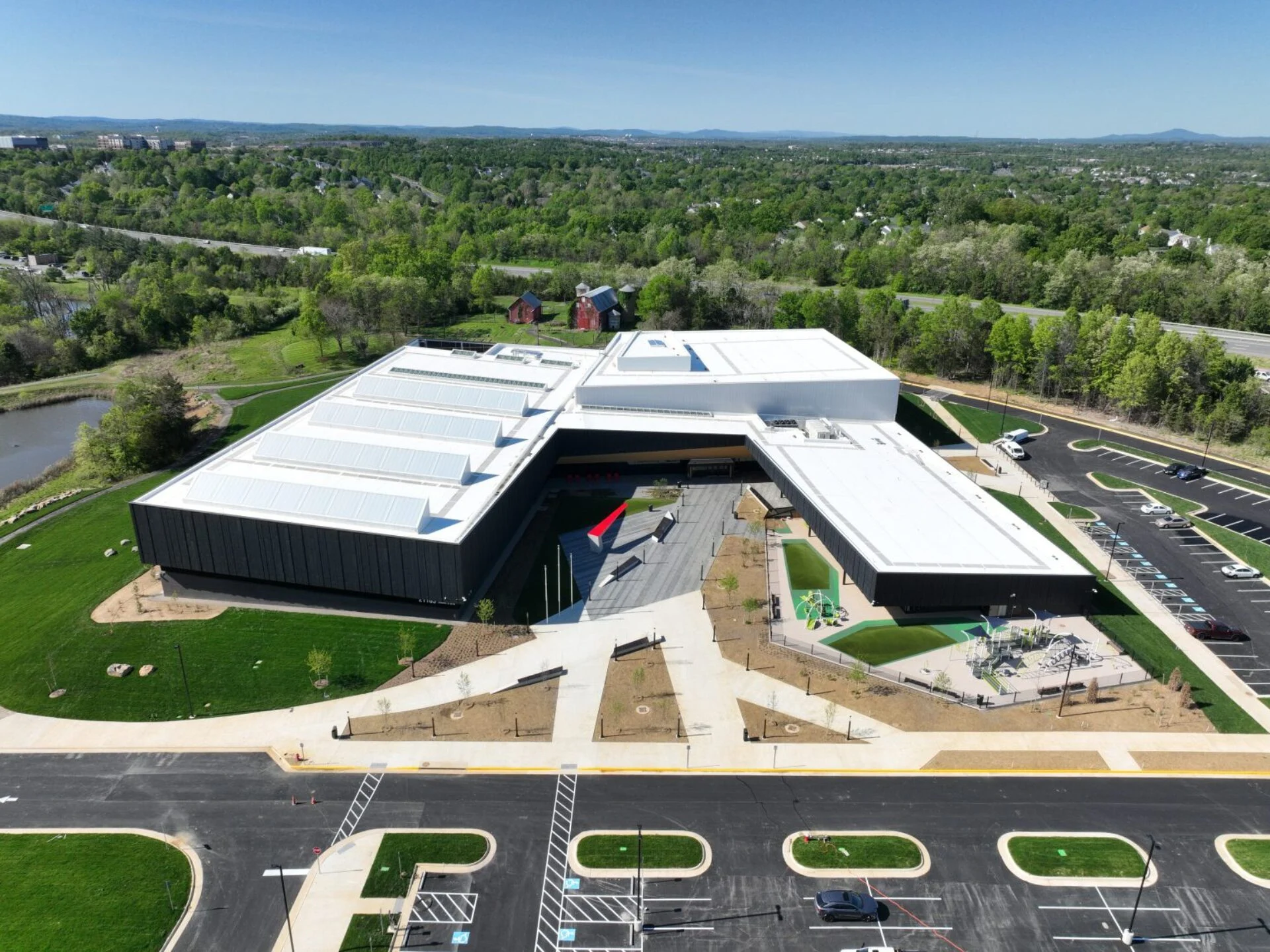
A gym roof works harder than it looks
Stand on the roof of a busy fitness center and you are standing over a building fighting two problems at once: a wide-open floor plan with almost no interior structure to break up the span, and a crowd of people breathing, sweating, and moving heat into the air below. Both of those land on the roof. We see it all over the Fargo market, the box gyms along 13th Avenue South and the 45th Street retail corridor, the 24-hour clubs anchoring strip centers in West Fargo, the larger wellness complexes that pull members from across Cass County and over the river from Moorhead. They look like simple flat-roof boxes from the parking lot. The roof assembly is anything but simple.
High occupancy means a roof full of HVAC
A fitness floor packed with members generates a heat and CO2 load closer to an event venue than to a retail store of the same size. Moving that air takes serious rooftop equipment, large units serving the main training floor, dedicated systems for group-exercise studios, separate exhaust for locker rooms, and more. The penetration count per thousand square feet on a gym roof routinely runs two to three times what a comparable retail building carries. Every one of those curbs is a detail that has to be flashed right and built to the height the membrane warranty requires, because a gym roof simply has more places to leak than most buildings its size.
The weight matters too. Those big air handlers are heavy, and on the long open spans typical of a fitness floor, we look hard at where the loads land and how the deck carries them before we set or reset a unit during a reroof. An undersized or improperly supported curb that was tolerable on the old roof gets corrected as part of our scope, not deferred.
If there's a pool, the real battle is from underneath
Plenty of the wellness facilities we maintain in the Fargo area run a lap pool, a hot tub, a steam room, or all three. The moment a building has standing warm water and humid enclosed air, the roof faces vapor drive, humid interior air pushing moisture up into the roof assembly from below. If the vapor retarder is in the wrong place or missing, that moisture condenses inside the insulation, soaks it, and quietly destroys its R-value over a couple of seasons while the membrane on top still looks fine. We have opened up natatorium-adjacent roofs that were drenched inside with no visible leak anywhere.
So on any gym with a pool or wet area, we treat vapor control as part of the design, not an afterthought. We confirm where the vapor retarder belongs for this climate zone, specify the assembly to keep moisture out of the insulation, and lean toward fully adhered membranes over those spaces to cut down on the fastener penetrations that give vapor a path. Getting this right is the difference between a roof that lasts its full service life and one that fails from the inside out.
Membrane choices that fit a fitness building
For gyms without a pool, 60-mil TPO mechanically attached over polyiso is a sound, economical answer, and the reflective white surface helps hold down cooling cost on a building that is generating heat from open to close. For facilities with pools, steam, or heavy wet areas, we usually move to a fully adhered TPO or PVC system, which gives a tighter, more vapor-resistant assembly with far fewer penetrations through the membrane field. The right call depends on what is happening inside the building, which is exactly what we look at before we spec anything.
Drainage and service traffic on a busy roof
Two things wear out a gym roof faster than the membrane itself. The first is drainage. A wide, dead-flat fitness roof ponds, and in Fargo that ponding becomes a heavy, slow-melting snow and ice load every winter that sits exactly over the spots where the assembly is weakest. We design positive drainage into a reroof with tapered insulation and we keep the internal drains and overflow scuppers clear, because a blocked drain under a melting load is how a flat gym roof goes from a slow leak to a ceiling failure over an occupied studio. The second is foot traffic. A gym roof gets walked constantly, HVAC techs servicing all those units, refrigeration and pool-equipment contractors, fire and life-safety crews. We protect the membrane with walkway pads along the routes between rooftop equipment so years of service visits do not abrade the surface and open a leak path.
You never close, so we work around that
The hard part of gym roofing is rarely the roofing. It is the fact that many of these clubs run from before dawn until late at night, and the 24-hour locations never truly close at all. Members are arriving at 5 a.m. and the parking lot is still busy at 10 p.m. We build the schedule around that from the start, confirming daily watertightness before the early crowd shows up, coordinating any rooftop unit shutdowns with the facility team so air quality over the pool stays within state health requirements, and keeping noisy work clear of the hours when it sits right over an occupied studio or locker room. That coordination is in the proposal. It is not a surprise we hand you later.
Independent owner or national brand, same closeout
Some of the Fargo-area fitness buildings we work on are run by national brands with corporate facilities teams and approved-vendor processes; others are independent clubs or investor-owned buildings managed locally. We fit into either. The handoff at the end is the same regardless: permit and final inspection records, manufacturer warranty registration, a roof diagram with the full penetration inventory, and the drain and flashing documentation a facility needs for its asset file, formatted for a corporate system when that is what the brand requires.
Let's look at your facility's roof
Whether you run a single club in Fargo or a building in West Fargo or Moorhead with a pool you are worried about, the place to start is a roof walk that accounts for your real occupancy and moisture loads. Request a roof review or call 701-987-7206 and we will tell you what your roof needs.