
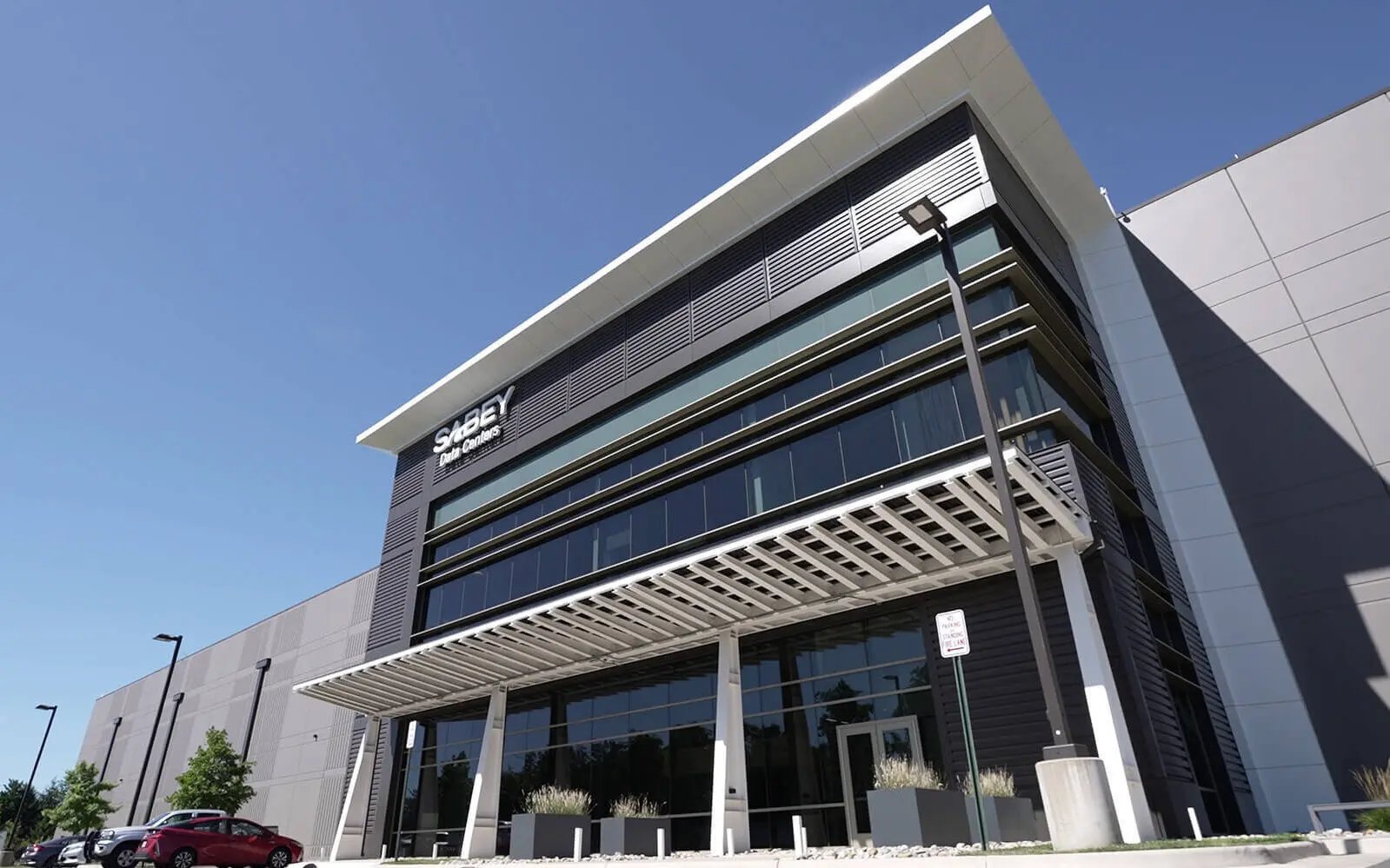
Fargo has quietly become one of the most important data center markets in the upper Midwest, centered on Microsoft's substantial campus investment in the region. Microsoft chose Fargo in part because of the cold climate, sub-zero winters provide months of free economization cooling, dramatically reducing the energy cost of rejecting heat from server halls compared to warmer markets. That same cold climate that makes Fargo attractive to hyperscale computing operators presents a demanding set of roofing challenges that require specialized knowledge and materials selection well beyond what typical commercial contractors encounter.
The Microsoft Fargo data center campus represents the kind of large-footprint, mission-critical computing infrastructure that is redefining the roofing requirements in this market. Campus-scale facilities cover hundreds of thousands of square feet of roof surface, and the performance of that surface directly affects the energy efficiency of the entire operation. Insulation values that would be acceptable for a warehouse or retail building are wholly inadequate for a data center in Fargo's climate, where maintaining stable interior temperatures during a January cold snap with exterior temperatures at minus twenty requires a roof assembly engineered for extreme thermal resistance and minimal thermal bridging.
North Dakota State University's computing and research infrastructure adds another dimension to Fargo's data center roofing market. Academic high-performance computing facilities have different operational profiles than commercial cloud campuses, they often house experimental equipment, specialized environmental monitoring systems, and research-grade HVAC configurations that place unusual demands on the roof assembly. NDSU facilities require contractors who can work within institutional procurement processes, understand the academic calendar constraints on construction activity, and navigate the approval processes that govern work on public university property.
The thermal dynamics of a Fargo winter create conditions that demand careful attention to vapor management in roof assemblies. When a data center interior is maintained at controlled temperature and humidity while the exterior drops to minus twenty or colder, the vapor pressure differential driving moisture toward the cold exterior is substantial. Without a properly placed and specified vapor retarder, moisture will migrate through the roof assembly and condense within the insulation layer, degrading its thermal performance over time and eventually creating conditions for membrane deterioration. The solution is not simply to add a vapor retarder, it is to conduct a detailed hygrothermal analysis that accounts for the specific interior conditions, insulation type, and climate exposure before any material is specified.
Snow load management is a life-safety and operational concern unique to northern markets. Fargo's winters regularly produce significant accumulation, and flat commercial roofs must be designed and maintained to handle the loads that result. Data center operators who allow snow to accumulate on their roofs face two risks: structural overload if accumulation exceeds design limits, and the ice damming that occurs when heat from the building melts snow at the roof surface while the perimeter remains frozen. Ice dams can force water under membrane seams and flashings in ways that are difficult to detect until significant damage has occurred. Heated drains, snow guards, and properly designed tapered insulation systems that promote positive drainage even in winter conditions are essential components of a Fargo data center roofing strategy.
The freeze-thaw cycle that Fargo experiences dozens of times each year is particularly harsh on penetration flashings, drain boot collars, and any roofing component that contains a dissimilar material joint. Water that infiltrates a small gap, freezes, expands, and then thaws will widen that gap incrementally with each cycle. Over a few seasons, what began as a hairline deficiency becomes a pathway for bulk water entry. Contractors who use high-quality, flexible flashing materials and take the time to properly condition and prepare substrates before installation will produce work that survives Fargo winters without this progressive deterioration.
Energy efficiency considerations in Fargo data center roofing diverge somewhat from warmer markets. The white cool-roof membranes that are the default specification in southern states can actually increase heating energy consumption in northern climates during winter months by reflecting solar gain that would otherwise warm the building. Many Fargo data center operators specify gray or tan membrane colors that balance reflectivity and solar absorption across the full annual cycle. The right answer depends on the specific facility's energy model and the relative cost of cooling versus heating in the operational budget, a calculation that experienced contractors in this market can help owners work through.
Rooftop mechanical equipment serving data centers in Fargo must be specified, installed, and maintained with winter conditions in mind. Cooling towers that are not properly winterized can freeze and rupture. HVAC equipment curbs must be insulated and flashed to prevent cold bridging that creates condensation problems on interior ceiling surfaces. Generator exhaust systems require special attention because the intermittent high-temperature exhaust from diesel generators creates thermal cycling stress at penetration flashings that far exceeds what normal HVAC equipment produces. All of these considerations feed into a roofing specification that is fundamentally more complex than what a standard commercial project requires.
The long-term maintenance program for a Fargo data center roof should include a late-fall inspection focused on preparing the assembly for winter, checking drains and scuppers for debris that would impede drainage under ice, inspecting flashing systems for any movement or separation that could allow ice damming, and verifying that any heated drain systems are operational before the first freeze. A spring inspection after snowmelt should look for any damage caused by ice movement, identify membrane areas where freeze-thaw cycling has stressed seams, and clear any debris deposited by winter storms. The investment in these inspections is modest relative to the cost of an undetected leak in a mission-critical computing environment.
Fargo's emergence as a significant data center market means that the roofing contractors who develop genuine expertise in mission-critical facilities here have a substantial competitive advantage. The combination of extreme climate conditions, hyperscale client expectations, and the technical complexity of data center roofing creates a market where general commercial contractors are not adequate substitutes for specialists. Facility managers and owners evaluating roofing contractors should look for demonstrated experience on similar facilities, relationships with major membrane manufacturers who can provide technical support in cold-climate applications, and the organizational capacity to execute large-footprint projects on the compressed timelines that hyperscale operators demand.
Frequently Asked Questions
What R-value should a data center roof in Fargo target?
Fargo's Climate Zone 6 designation and the unique continuous heat loads of data center facilities combine to push appropriate insulation targets well above standard commercial minimums. R-30 should be considered a floor, and R-40 or higher is often specified on new construction or full re-roofing projects. Tapered insulation systems that eliminate ponding potential while achieving high thermal resistance are common, using polyisocyanurate as the primary insulation layer with EPS or XPS cover boards where compatibility with the membrane system requires it.
How do I handle roof drains in a Fargo data center to prevent winter freezing?
Heated drain assemblies with self-regulating heat cables are the standard solution for primary drains on critical facilities in this climate. The heat cable should extend from inside the building through the drain body and into the leader line to the point where freeze protection is no longer needed. Overflow scuppers should be positioned and detailed to function even if primary drains are temporarily impeded by ice, providing a secondary drainage path that prevents structural overloading from ponded water beneath snow accumulation.
Should I specify a white or darker membrane for a Fargo data center?
This is genuinely a facility-specific decision that requires looking at the energy model. White TPO maximizes cooling efficiency during summer months but sacrifices solar gain in winter. For data centers that are cooling-dominated year-round because of internal heat loads, white membrane often still makes sense. For facilities where heating loads are significant in winter, which is less common in server-heavy environments but possible, a tan or gray membrane may reduce total annual energy cost. Ask your roofing contractor to provide an energy analysis before specifying membrane color.
How does snow accumulation affect a data center roof in Fargo?
Snow accumulation creates two distinct risks: structural overload if weight exceeds design limits, and ice damming at the perimeter if heat from the building melts snow that then refreezes at the cold roof edge. Both risks are manageable with proper design, ensure the structural system is engineered for ground snow load plus drift load at parapet transitions, specify positive drainage slopes to move snowmelt away from the building, and install heated edge flashings at locations where ice damming history suggests risk.
What qualifications should I require from a roofing contractor working on a mission-critical facility in Fargo?
Require manufacturer certification from the membrane supplier, not just from any manufacturer, but from the specific manufacturer whose system you are specifying. Require documented experience on data center or other mission-critical facilities of comparable size. Verify that the contractor has adequate insurance limits for the exposure involved, including completed operations coverage that extends several years beyond project completion. Ask for references from similar projects in comparable cold climates, and contact those references to discuss winter performance of the installed systems.
Questions Building Owners Ask
What usually changes the price for commercial real estate and REITs?
For commercial real estate and REITs, access, wet insulation, deck repair, edge metal, drains, temporary protection, after-hours work, and occupied-building staging change the number faster than the roof label. We verify those commercial real estate and REITs conditions around Commercial Real Estate and REITs before treating a square-foot price as reliable.
Can commercial real estate and REITs be handled while the building is occupied?
Often, but the commercial real estate and REITs sequence has to be planned. We review entrances, loading docks, patient or tenant areas, roof access, odor sensitivity, and weather windows near budget file documentation before recommending daytime, phased, or after-hours work.
How do we know if commercial real estate and REITs should be repair, coating, recover, or replacement?
We look at commercial real estate and REITs through wet insulation, deck condition, attachment, slope, seam condition, drain performance, and edge-metal risk. If the roof around Sanford Medical Center Fargo is dry and stable for commercial real estate and REITs, preservation options stay on the table. If moisture or deck damage is spreading through commercial real estate and REITs, replacement planning becomes more defensible.
What documentation do we get after a commercial real estate and REITs inspection?
Typical commercial real estate and REITs documentation includes roof-area notes, photo locations, leak or damage observations, priority levels, repair limits, access constraints, and budget categories. On storm work tied to commercial real estate and REITs, we provide contractor-side roof evidence without promising insurance outcomes.
How quickly can you look at commercial real estate and REITs after a leak or storm?
Timing for commercial real estate and REITs depends on weather, crew load, access, and whether interior water is active. We triage emergency conditions first, especially when water is entering occupied space near Essentia Health Fargo, and then separate temporary dry-in from permanent scope.